Table of content
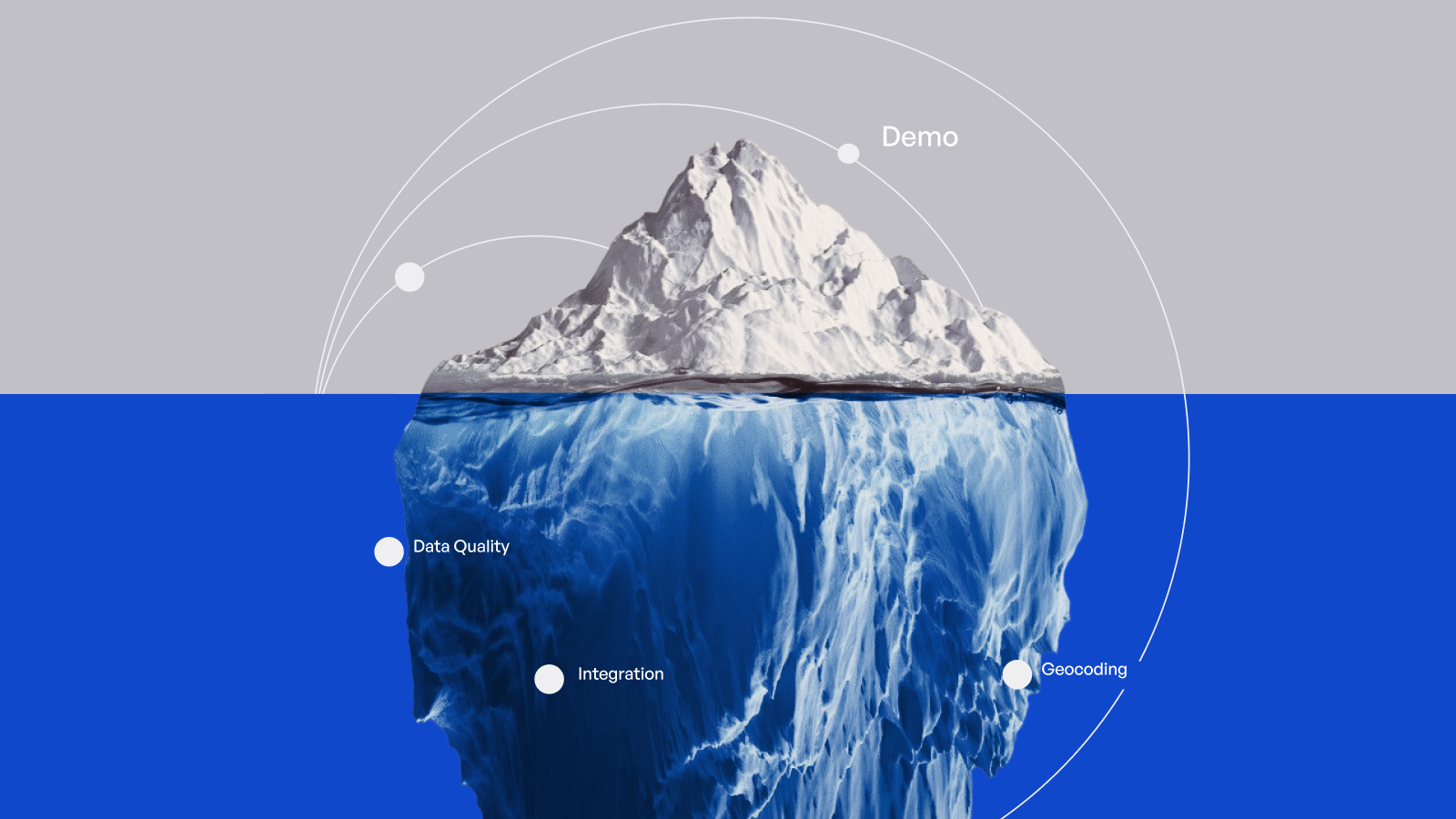
Every AI demo in freight works. The data is clean, the lanes are tidy, the addresses all geocode on the first try, and the model returns something impressive in four seconds. Everyone nods. The deal moves forward.
Then you go to run it on your own data, and very little works the way it did in the room.
1: Where the data breaks
That's not because the demo was rigged. It's because freight data, in the wild, is a mess, and the mess is invisible until you're standing in it. The same city is spelled four different ways across three systems. Weights are in kilograms here and pounds there. A "lane" means one thing to pricing and something else to operations. Half the addresses don't resolve to a real location. Some fields are blank, some are stale, some are confidently wrong. None of it shows up in a demo, because a demo runs on data someone had to set up to work flawlessly.
2: The work before the model
So here's the unglamorous truth about AI in freight: most of the real work happens before the model does anything clever. Cleaning data, standardizing formats, fixing the location data, agreeing on very basic things such as how a lane should be defined across systems. It's tedious, slow, generally underbudgeted, and it's where most AI projects quietly fail.
3: Messy by nature
And it isn't anyone's fault. Freight data is messy because freight is messy: dozens of parties touching one shipment, decades of legacy systems that never spoke to each other, manual entry under time pressure, a physical world that refuses to be tidy. The mess is the natural state, not a sign someone slipped up.
4: The question to ask
But it does change the question you should ask when someone shows you AI for freight. The interesting question isn't "how good is the demo." Every demo is good. The real question is "what happens when this meets my data, in all its mess, and who's doing the work to clean it up?"
5: What actually holds up
Because the companies that make AI genuinely useful in freight usually aren't the ones with the slickest demo. They're the ones who took the data seriously and built something that holds together when the inputs are ugly. That work never makes the sales deck. But it's the whole difference between a pilot that wows and a system that runs.
The way forward
The demo was always the easy part. The data underneath is where the real work lives, worth asking, before you sign anything, whether the people selling it to you have actually done it.
Share this Post
See what Apex finds in your network
We'll work through your freight, your constraints and your objectives.